
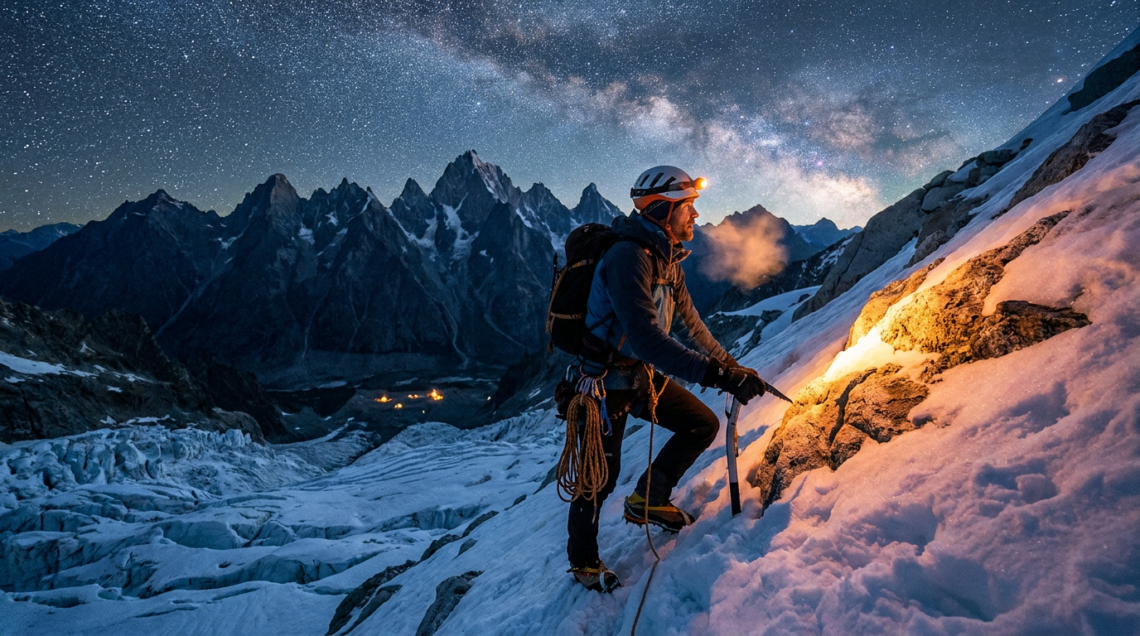
The Master Checklist of Expedition-Grade Gear for Cold-Weather and Alpine Adventures
The Master Checklist of Expedition-Grade Gear for Cold-Weather and Alpine Adventures
Many gear checklists assume you’ll be a little chilly – not actually cold. They were made for sitting at a sunny overlook, for a day hike when you weren’t sure you’d be out too late, for campfire chatter – not complete silence. With everything you have freezing, in vain, to keep the heat in. And the chill index reading -10 before a breeze came up.
Start With Layers, Not A Jacket
The layering system is based on the principle that each item of clothing you wear has a specific function. The three layers that make up your outfit are:
1. Base Layer: This layer is in contact with your skin and its main role is to get rid of sweat and moisture from your body, keeping your skin dry. This layer is in charge of keeping your body at a comfortable temperature.
2. Mid Layer: Just like the name suggests, this layer goes between the first and the third one. Its function is to keep you warm by trapping your body heat and insulating you from the cold outside.
3. Shell Layer: Your outer layer serves as a shield to block the wind, rain, or snow and keep the warmth inside, it adds insulation too.
When these layers are combined and used correctly, they can keep you warm and comfortable in most conditions.
Sleeping Bag and Pad Ratings, Decoded
The temperature ratings printed on a bag label are all but meaningless unless they’ve been verified by EN/ISO 23537 testing. This gives you a pair of grades from the lab – a comfort rating and a limit rating – using a heated mannequin, not the marketing department, to determine what you feel at various temperatures. The comfort rating is what an average woman should expect to rest peacefully through a cold night. The limit rating is the other end of the scale. If a bag doesn’t print an EN/ISO number on the tag, treat its temperature claim as pure speculation.
A terrific bag on the wrong pad will be just as cold as the wrong bag, since the Earth conducts warmth from your body 20 times faster than the air. That’s why the insulating value (R-value) of your pad matters as much as the insulation in your bag. For winter camping, you’ll want a pad with an R-value of roughly 4.5 or more, and adding in a second pad (it’s fine to put a closed-cell foam pad under an inflatable) doubles insurance against the pad popping or leaking. When your inflatable pad goes flat at 2 a.m. in a storm, the foam pad underneath keeps you off the snow until sunup.
Your Tent Is A Structure Problem, Not A Fabric Problem
A 3-season tent is designed to keep out rain and withstand moderate wind. It is not designed to handle heavy snow or strong wind, but this is a question of structure, not materials. Winter models use geodesic or tunnel architecture that spreads stresses across the entire frame, instead of focusing it on one or two joints, like a dome. This allows a geodesic tent to support the weight of snow pressing down on the fly better than a similar dome tent that collapses in 6 inches of snow, not even sags in 12.
Full-coverage vestibules are more important in winter than in any other season. Wet, snow-covered gear in your sleeping space turns your tent into a walk-in freezer. Room for boots, pack, and stove provides a dry area and a place to cook without opening the door to the wind.
Why Canister Stoves Fail You
Speed is not the primary concern when selecting a cold-weather stove – reliability at temperature is. Canister stoves are fueled by pressurized gas, and that pressure decreases in the cold. At just above freezing, output drops. Below it, many canisters just won’t light, exactly when you need them most.
This is why mountaineering teams default to white gas stoves. Liquid fuel doesn’t feel the cold the same way, and it works in temperatures where a canister stove won’t even turn on. The tradeoff is weight and a bit more mucking about with priming, but that’s a fair trade versus a stove that flames out in the snow. If you’re melting snow for water – which you’re likely to be doing in winter – plan for plenty more fuel than you would use for just boiling water. Snow is a downright inefficient water source compared to a stream, and running out of fuel on day seven of a ten day arctic trip is not an option.
The Traction Hierarchy
Using trekking poles can help you maintain balance while on packed trails and moderate slopes, but they can’t provide traction when the terrain becomes steeper or icy. Microspikes are ideal when the snow is packed or the trail is icy since they are designed to prevent slipping, rather than a fall. However, on steeper inclines, alpine ice, or glacier terrain, you’ll require crampons as they are able to grip much better than microspikes.
If a fall can become a slide, you should have an ice axe with you. This is the tool that enables you to stop yourself from sliding down an unstoppable slope. A fall can become a slide any time you’re on steep terrain and you can’t dig your feet in, so the ice axe is the single most important item for protecting life if you know conditions might be icy. The other tools can’t replace it.
Avalanche Gear Is A Drill, Not A Purchase
Having a transceiver, probe, and shovel in your backpack is a given if you’re going into avalanche-prone terrain. But owning this gear won’t help you or anyone else if you aren’t practiced in using it. What saves a buried person’s life is how quickly you can rescue them, and that only comes with training. A group that has never practiced a burial scenario will lose critical minutes just trying to get their search patterns right, and their probe skills dialed in, all while the victim’s survival chances tick by the second.
Practice searching, probing in a grid, and digging fast. As a full group if possible, before you have to do it for real.
Lighting and Electronics That Don’t Quit In The Cold
Cold temperatures have a significant impact on batteries, more than most people realize. Alkaline batteries used at freezing temperatures have only about half the capacity they do at room temperature, based on capacity data provided by leading battery manufacturers like Energizer. This is not a small difference; it’s the distinction between a light that lasts your entire trip and one that goes out on night two. In the cold, disposable lithium cells perform much better in terms of output retention, which is why they are the go-to option for any mission-critical devices such as headlamps, GPS units, and avalanche transceivers.
The go-to camp setup combines a headlamp (for hands-free camp tasks) with a high-output handheld device that can scan terrain, signal, or check conditions at a distance. A headlamp by itself won’t throw the beam far enough to read a slope or spot a marker a hundred yards out, and a handheld alone means your hands are full when you want them free. For that handheld role, many expedition guides reach for the best flashlights built specifically for high output and cold-weather reliability, since a light that dims or dies at altitude is a safety failure, not an inconvenience. Bring extra batteries kept near your body heat in an inner pocket, not in your pack: cold batteries are bad batteries.
Navigation Redundancy
A phone or GPS unit is a useful tool, not a substitute for basic knowledge. Batteries can fail, screens can break, satellite signals can be lost in narrow valleys, and cold weather can drain the battery faster than you anticipate it would last the day. Every alpine journey should have an accompanying physical map and compass as a backup, and just as important, the actual ability to use them when visibility is reduced to a few feet and each slope looks the same.
An altimeter watch is a tool that often goes unnoticed by many hikers. In areas where visual landmarks are lost under snow, and all the features look the same, you can easily cross-reference your map by comparing your altitude. This can usually tell you where you are faster than attempting to triangulate your position from prominent terrain features.
The Small Items That Decide Comfort
There are a few cheap, easy-to-forget items that stand between a trip you can handle and one you wish you’d never signed onto in the first place. Gaiters seal the gap between boot and pant leg, keeping snow out of your boots and your feet dry no matter how much postholing you end up doing. Insulated water bottles may strike you as less essential, until you realize that water freezes solid in a pack much sooner than you’d guess; stash yours in your sleeping bag overnight so you’re not starting the morning with a block of ice.
Speaking of – sunscreen isn’t an option on a glacier. Neither is an ultra-high-SPF barrier cream, or glacier glasses. Sun exposure goes up with elevation, and the light reflecting off the snow doubles those deep and dangerous UV rays. A ten-buck emergency bivvy sack should be in your pocket every time you head out – it weighs nothing, it costs nothing, and it could mean the difference between an unpleasant forced overnight and a legitimate survival situation should weather or injury pin you down.
Building Your Priority-Ordered Checklist
When you’re packing, order matters. Shelter and warmth systems come first: sleeping bag, pad, tent, insulating layers. Traction and navigation tools come next, because they prevent the accidents that turn a trip into a rescue. Lighting, stove, and electronics follow, since they support the plan rather than define it. Comfort items – extra layers, camp shoes, luxuries – come last, and they’re the first things to cut if weight or space runs tight.
"Expedition-grade" doesn’t mean the priciest item on the shelf or the lightest one in the catalog. It means the tool matched to the conditions you’re actually walking into. A white gas stove is expedition-grade at 10 below zero and dead weight on a mild three-season trip. The goal isn’t buying the best version of everything – it’s understanding why each piece of gear does its job, so you can tell when a substitute is fine and when it isn’t.
Cold-weather travel punishes shortcuts that summer hiking forgives. Build your kit around what actually fails when temperatures drop, rehearse the systems that only work with practice, and the mountain stops being the thing you’re fighting against.


You May Also Like
How to Choose the Right Ammunition for Your Shooting Needs
7 Black Clothing Items To Have In Your Closet